Home Energy Audits: What They Include and How They Save You Money
Is your home or business feeling drafty, or are your energy bills creeping higher each season? Maybe you’ve replaced bulbs and sealed a few windows, but something still isn’t adding up. At Von's Heating & Cooling, we know it’s frustrating when comfort slips away and costs climb. That’s where a thorough home energy audit steps in—it shines a light on hidden energy leaks, wasted dollars, and opportunities for real savings.
A home energy audit isn’t just for large estates or commercial spaces. Every building—old or new—can benefit. Let’s pull back the curtain on what’s involved, what you’ll learn, and how these findings can translate into lower utility bills and a healthier, more comfortable space.
Why Energy Audits Matter
Think of your home or office like a bucket. If it has holes, no matter how much water (or in this case, heat and cool air) you pour in, it just keeps leaking out. Energy audits plug those holes, so your HVAC system, radiant heating, or mini-splits aren’t working overtime to make up the difference.
Energy isn’t cheap, either. According to the U.S. Department of Energy, heating and cooling account for nearly half the energy use in a typical home. That means small inefficiencies add up fast—costing you month after month.
Quick Safety Checklist Before You Start 🛑
Before tackling any efficiency upgrades or even scheduling a professional audit, review these safety musts:
- Check smoke and carbon monoxide detectors: Batteries fresh? Units tested recently?
- Look for visible wiring issues: Frayed cords or open junction boxes should be handled by pros.
- Know where your shut-offs are: Main water, gas, and breaker panel should be easy to access.
- Ventilation matters: Make sure exhaust fans (bathroom, kitchen) are working and venting outside.
- Limit DIY electrical work: Stick to safe, simple fixes—leave complex jobs to licensed technicians.
These basics prep your space for a smooth audit and help keep everyone safe.
DIY Energy Checks vs. Calling a Pro
You can walk your property and spot some obvious issues—drafts around doors, loose insulation, or visible gaps. Simple steps like weatherstripping and swapping dirty HVAC filters make a difference.
But the real magic? It’s in the details most people miss. That’s where a certified home energy auditor brings their toolkit:
- Blower door tests to pinpoint air leaks you can’t see or feel.
- Infrared (thermal) scans to visualize hidden insulation gaps.
- Professional-grade air quality meters for IAQ testing you can trust.
DIY fixes are a good start, but a pro’s trained eye and advanced tools uncover what’s really costing you.
What Pros Do on Arrival
When a Von’s Heating & Cooling specialist arrives, here’s what you can expect:
1. Full Walkthrough
We’ll walk through your property, room by room, asking questions about comfort zones, past repairs, and seasonal issues. It’s not an interrogation—just a chance to get the lay of the land.
2. Blower Door Test
This is the gold standard for finding leaks. A special fan is mounted in an exterior door, gently pulling air out to lower the inside pressure. Any outside air sneaking in through cracks, unfinished attics, or leaky ducts is suddenly obvious. It’s like turning up the volume on every draft in the house.
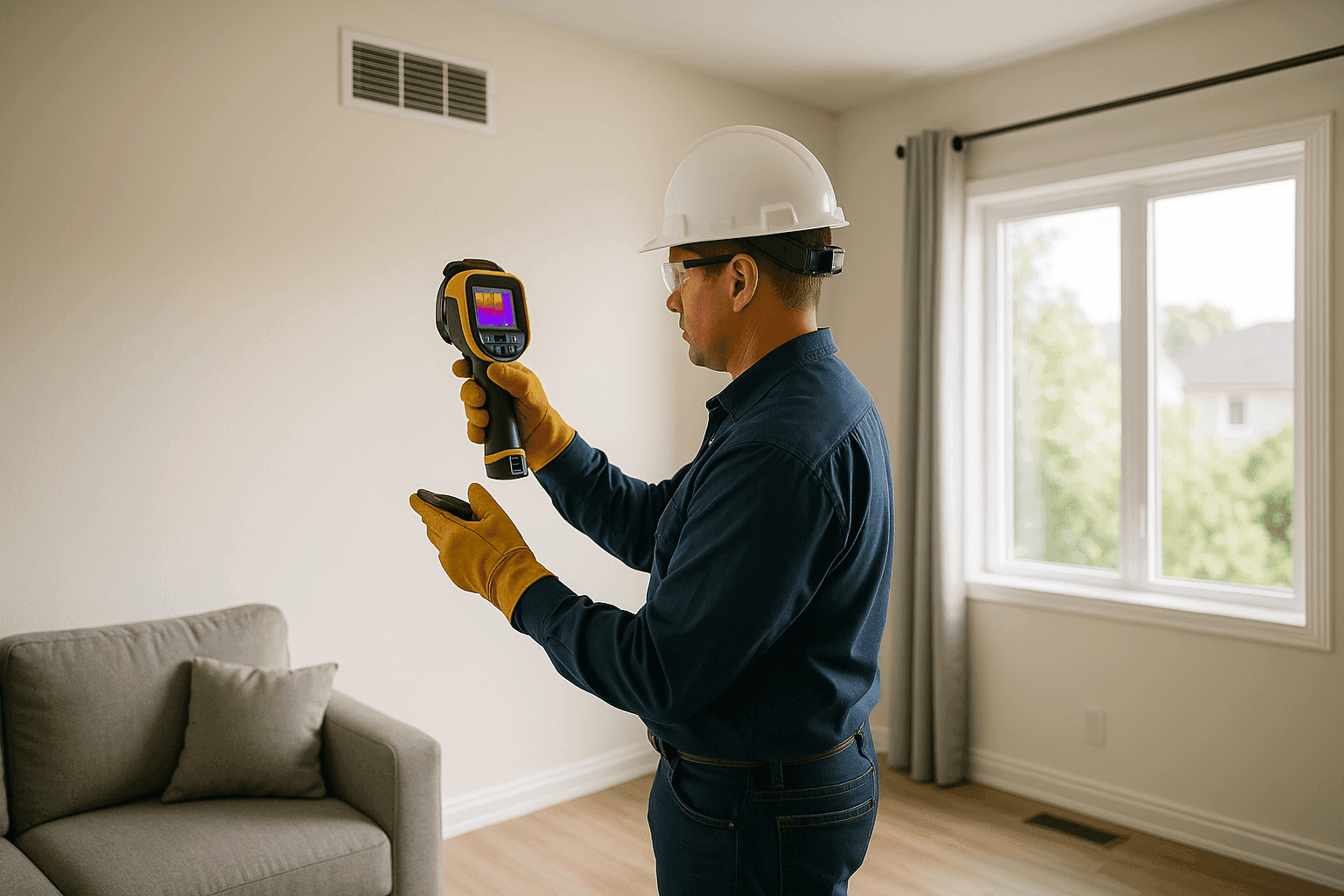
3. Infrared Scanning
Next, we use a thermal camera. Cold spots show up as blue or purple, meaning insulation is lacking or air is slipping in. Think of this as x-ray vision for your walls and ceilings.
4. HVAC & Ventilation Assessment
We’ll inspect your HVAC system—whether you’ve got radiant heating near you, a traditional furnace, or ductless mini-splits. Air balancing, filter checks, and duct cleaning recommendations often come out of this step.
5. Indoor Air Quality (IAQ) Testing
Especially important for families or sensitive environments. We may check for excessive dust, humidity, or even potential allergens with high-precision meters.
6. Review and Recommendations
You’ll get a clear, jargon-free report. It lists what we found, why it matters, and simple steps to improve comfort and reduce costs.
Common Issues Uncovered
Most energy audits turn up a similar mix of issues—some small, some serious:
- Leaky windows and doors: Weatherstripping or caulking can often fix these.
- Poor or missing insulation: Especially in attics, crawl spaces, or rim joists.
- Ductwork leaks: Even tiny pinholes waste heated or cooled air.
- Inefficient HVAC systems: Aging furnaces, AC units, or thermostats that need upgrades.
- Blocked or out-of-balance vents: Rooms that are always too hot or too cold.
- Humidity problems: Too dry in winter, too sticky in summer.
Each problem has a solution—sometimes a quick fix, sometimes a smart investment.
Prevention & Maintenance Tips
Want to keep energy waste in check between audits? These strategies help:
- Change HVAC filters every 2–3 months.
- Schedule regular maintenance: Annual checkups for heating, cooling, and generator systems.
- Clean ducts and vents: Especially after renovations or every few years in high-use homes.
- Seal air leaks: Use caulk or weatherstripping where light peeks through.
- Upgrade thermostats: Programmable models can save hundreds per year.
- Consider air scrubbers or humidifiers if indoor air quality is a concern.
Simple routines make a big difference over time.
Costs & Time Factors
How much does an energy audit cost? Prices vary by property size, audit depth, and region. Generally, residential audits take 2–4 hours; commercial spaces may require more time. Remember, the investment often pays for itself quickly through lower energy bills.
According to the U.S. Department of Energy, typical homes can save 5–30% on energy bills after recommended upgrades—sometimes more with older buildings or equipment.
When It’s an Emergency
An audit isn’t just for comfort—it can catch safety issues, too. If you notice:
- Sudden spikes in utility bills
- Persistent drafts or unexplained chill
- HVAC not responding or odd smells
- Humidity that never goes away
Don’t wait. Unchecked leaks or failed equipment can lead to bigger repairs or safety risks.
Our 24-hour emergency service can help with urgent HVAC, generator, or ventilation concerns—especially if your audit uncovers something serious.
FAQ: What Homeowners & Businesses Ask Most
Do I need an audit if my house is new?
Yes. Even new builds can have insulation gaps, HVAC imbalances, or leaky ductwork. An audit ensures everything is performing as it should.
Will an audit disrupt my day?
Minimal disruption. Most tests are non-invasive—no tearing open walls. You may need to close windows and doors during blower tests.
Is it worth it for a small home or business?
Absolutely. Smaller spaces leak energy, too. The savings often add up even faster.
What certifications do auditors carry?
Look for professionals certified by organizations like the Building Performance Institute (BPI) or RESNET. These groups set standards for safe, effective audits.
Local & Seasonal Considerations
Energy efficiency isn’t one-size-fits-all. In humid climates, dehumidifiers or upgraded ventilation may matter most. In cold winters, radiant heating near you or better insulation can make a dramatic difference.
Plan audits ahead of extreme weather—before summer heat waves or winter cold snaps. This timing helps you prep for the season and take advantage of the biggest savings.
For commercial clients, audits can also help you meet local energy codes or qualify for rebates. Always check local building codes or consult sources like the International Energy Conservation Code (IECC) for current requirements.
What You Can Do Right Now
Not ready for a full audit? Try these today:
- Walk around with an incense stick or tissue near windows—see if air stirs.
- Check attic insulation depth (should be at least 10–14 inches in most regions).
- Listen for rattling or whistling in ductwork—signs of leaks.
- Set thermostats wisely: 68°F in winter, 78°F in summer as a baseline.
Every step brings you closer to a more comfortable, efficient, and affordable home or business.
Ready to take control of your comfort and energy bills? Call Von's Heating & Cooling now — or reach us anytime at 844-219-0444 .